
If you were an attentive student in your high school English class (or an avid fan of Breaking Bad), you might be able to recall the poem "Ozymandias," written by the famed Romantic Percy Bysshe Shelley. The sonnet describes an ancient statue of Ramesses II, also known as Ozymandias, which shows an obvious paradox in its command to “Look on my works, ye Mighty, and despair!” as the stone visage stands amongst the rubble of a once great Egyptian empire.
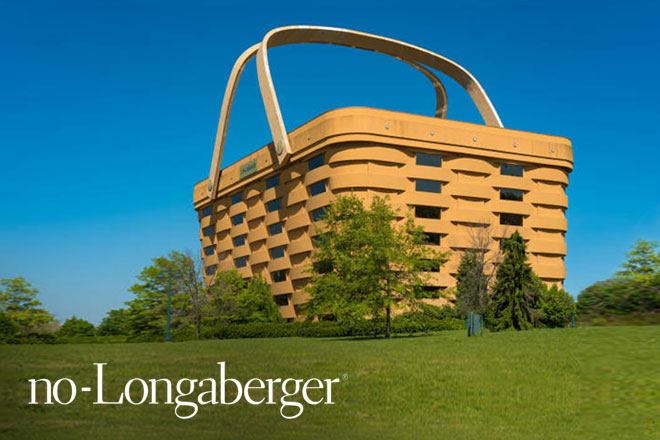
Amid the rolling hills of Newark, Ohio stands another set of ruins – not of an ancient empire, but an iconic image of American heritage and consumerism. At the height of its popularity, the Longaberger Basket immortalized this position through branding in architecture by constructing its national headquarters in the shape of its famed baskets.
Today, the defunct company, like Ozymandias, commands a level of immediate brand recognition. Onlookers who spot the property, which was recently listed for $8.5 million, are immediately transported to vivid memories of a Longaberger basket featured among a holiday spread or celebration. In fact, the brand, at one point in time, could have been considered a genericized trademark where the “Longaberger” name became synonymous with the word basket – regardless of the actual manufacturer. I can recall many instances where my mom would ask me to pull out her “Longaberger” as we prepared the house for the next family gathering, though not every basket in the house was an official Longaberger basket.
In honor of Independence Day and America250, we’re taking a deeper look at the ways branding in architecture has immortalized the position of an iconic American company, even long after its dissolution.
What was The Longaberger Company?
The Longaberger Company was founded in 1973 by Dave Longaberger, whose family came from a long line of basket weavers. From its founding, the company sought to deliver products that emphasized craftsmanship that would last for generations, making each basket a mechanism for honoring a customer’s own living legacy and American heritage.
The brand achieved its mission through several intentional differentiators. Unlike the mass-produced competition, every basket was hand-crafted in Dresden, Ohio using Appalachian maple wood splints. Longaberger emphasized its handwoven identity by featuring the real signatures and dates of each basketweaver on the finished products. This way, customers had an authentic touchpoint with the particular craftsman behind their particular piece.
Longaberger also reinforced its position through its sales model. Rather than rely on traditional retail stores and vendor relationships, the heritage basket weaver followed a home sales parties model similar to Tupperware or Mary Kay. The direct sales format emphasized the baskets as artisanal products, which were procured and sold among community members.
Another avenue Longaberger used to convey its American craftsmanship was its various limited-edition basket models. By releasing specialty collections and retiring certain styles, the basket weaver created scarcity for its premium, one-of-a-kind selection. As a result, many adoring customers became avid collectors of specific collections and pieces – a trend which persists today through sites like eBay.
Together, these facets contributed to the success of the Longaberger brand, which reached its peak in the 1990s. Following its growing popularity, the company decided to memorialize its position by constructing a new headquarters shaped like one of its beloved handmade baskets. By invoking branding in architecture, Longaberger then created a roadside spectacle that would continually remind passersby of its craftsmanship.
The Fall of the House of Longaberger
Despite employing some of the strongest positioning strategies, the original Longaberger Company no longer exists. After experiencing record sales of $1 billion in 2000, the basket artisan started experiencing a decline before eventually selling to a holding company in 2013 and liquidating in 2018.
So, how did the mighty house of Longaberger fall so far – even with strong brand identity, sales, and inventory?
The spiral began with the death of founder and visionary Dave Longaberger in 1999. As a result, the company faced leadership struggles and constant employee turnover, giving way to operational instability. At the same time, Longaberger was also dealing with changes in consumer preferences as direct-sales parties became a thing of the past and the 2008 financial crisis left many with little in terms of disposable income. Consequently, these factors led the business to lose focus of its original mission, leaving the branding in the architecture of its basket headquarters as the only physical reminder of an American legend.
The intellectual property rights to Longaberger were purchased in 2019 by Xcel Brands. Though the same name, trademarks, and other branding components were revived, the actual hallmark components of its heritage, craftsmanship position were not.
Instead of restarting its original manufacturing facilities, the new Longaberger Company outsourced production to Dresden & Co., eliminating the specialty craftsmanship that was once famous. Of course, in terms of distribution, the basket brand did not return to its home-party sales model. Xcel Brands chose to “modernize” Longaberger by making the brand an ecommerce and social media retailer. In addition, the parent company made the decision to extend the company’s offerings to include other homewares such as pottery, linens, and decor.
Branding in Architecture Reminds Us of Permanence through Positioning
As positionists, it comes as no surprise that the Longaberger resurrection tale has been an obvious flop. Compared to its previous iteration, the new company’s repositioned identity as a broader homewares vendor rather than specialized basket-weaving artisan has failed to resonate with its old customer base. Abandoned practices such as stamping the weaver’s signature, selling through boutique or relational means, and emphasizing basket products themselves has left the brand’s connection to the original “Longaberger” at the level of name alone.
The failure to actually bring back the Longaberger company is evidenced by its lackluster sales and marketplace presence. In some regard, one could even argue that many of its adoring fans may not even realize the brand lives on in the world of ecommerce. Instead, they only remember the Longaberger of old still represented through branding in architecture, which emphasizes what it once did best – handcrafted baskets.
As we return to the structure that prompted this analysis, we cannot ignore the positioning proverb at play. Like the now-empty structure, the Longaberger Company that once dominated a category no longer exists. Yet, the unique, basket-shaped effigy continues to reinforce the brand’s original position. This phenomenon puts the permanence of positioning on full display.
Whether you’ve heard us discuss it in the PositionistView® column or as a client using our agency services, positioning strategy cements brand identity into the minds of consumers. By focusing on its meaningful difference, a brand cuts through market clutter with precision focus that sears its particular identity into customer perceptions.
For Longaberger, its position as the heritage basket weaver remains the stronger, more permanent brand identity. When viewing the roadside basket, branding in architecture only enacts that reality as people remember the company’s original position rather than today’s overextended, mix-matched retailer of the same name. In a nutshell, strong positioning outperforms mediocre marketing.
For brands looking for ways to enshrine their own positions, a basket-shaped office building might seem extreme. However, branding in architecture is not a play isolated to those with an interest in pageantry. In actuality, most architectural branding is probably occurring right under your nose all the time.
Take your nearest Apple store as an example. As a brand, Apple maintains a position of innovation through simplicity. Whether a flagship location, like the one on Fifth Avenue, or an everyday mall outlet, its physical stores embody and reaffirm its position through simple furnishings, open spaces, and transparent glass features that highlight its cutting-edge products.
As an agency, we’ve even assisted clients in bringing branding to their architecture. For instance, we assisted one local hospital in growing brand awareness by incorporating the first letter of its name into outside awnings, roofs, and entrances throughout its network of offices, hospitals, and other locations. Now, locals associate the pointed “A” shape with the client and its position of leading local communities to improved health.
Whether a roadside attraction or subtle nod through interior/exterior design, branding in architecture allows for the ultimate act of dramatizing a position–one that can even outlast other marketing missteps and failures.
Curious how our agency can weave branding and architecture? Contact us to start crafting ways to put your position on full display.