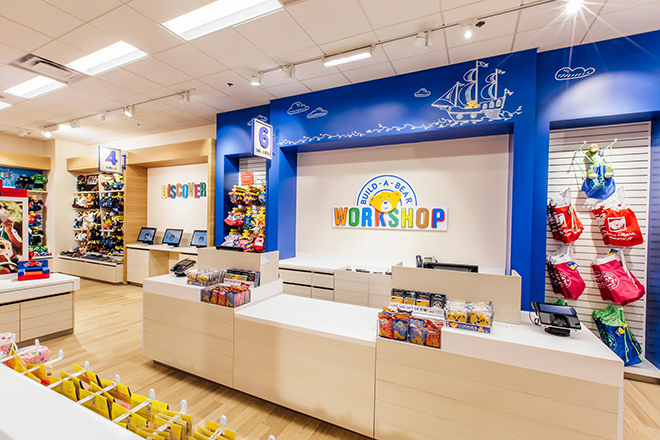
Some days I think my daughter was born in the wrong era. She loves the mall. We’ve literally spent hours trying on sparkly shoes at Dillard’s, stacked bracelets at Claire’s, and enough Bath & Body lotion to create our own little perfume factory. She’s FIVE. But no matter how much she loves these little glow-ups, her ultimate kryptonite is that giant, smiling stuffed bear sitting just inside Build-A-Bear’s entrance, practically begging her to come in. Luckily for my parents, I was in college when Build-A-Bear first came around, so I never fell for the allure. But I do love to see how brands evolve, and Build-A-Bear’s certainly done that.
Since the beginning, Build-A-Bear’s core positioning has been anchored in childhood innocence and wonder. Kids rush to find their favorite plush, then fill it up with special sounds, scents, and stuffing. After a little heart’s tucked inside, the bear gets stitched up and heads home with its newfound family. It’s cute. It’s fun. And it’s a model that’s worked the same way for decades, capturing the hearts of pint-sized shoppers and the wallets of their doting moms and dads.
But over the years, mall traffic dwindled, and those little shoppers grew up. And Build-A-Bear needed to keep them shopping. So what’d they do? They steered their massive ship toward the growing “kidult” sector – adults 21 and up who like buying toys and games for themselves, not just their kids. They closed failing mall stores and opened kiosks in high-traffic tourist hubs. And through a massive licensing strategy, a line extension was born.
The Line Extension Bear
Enter the Bear Cave™, an age-gated section of the Build-A-Bear website created specifically for adult shoppers and collectors.
This is where unexpected collabs come alive with toys that aren’t available in retail stores. The selection includes Build-A-Bear After Dark, a line of plush animals with slightly more mature clothing, accessories, and grown-up props. Phrases like “Zaddy,” “Red White & Booze,” and “On the Prowl“ are plastered across teeny tiny bear T-shirts. High heels, velvet boxers, champagne flutes, and wine bottles are optional plush add-ons. Even darker seasonal themes are making an appearance, including this year’s “Bloody Beary” Halloween plush – a white teddy bear holding a cracked mirror with blood dripping from its red eyes. Scandalous? Not really. But it is a far cry from the childhood nostalgia offered in stores and on the main site.
According to the company, teens and adults account for nearly 40% of Build-A-Bear’s total sales, so the line extension was a smart move. But companies don’t have to go to such "scandalous" extremes to capture the massive kidult target. Just ask LEGO.
The LEGO Line Extension
Unlike Build-A-Bear’s approach, which relies on mature and slightly more risqué themes, LEGO’s line extension drew in a new audience by promoting its classic bricks as high-end lifestyle products for grown-ups. Through the “Adults Welcome” campaign, the company introduced new product lines that looked like they belong on living room bookshelves instead of inside toy boxes. The line’s sleek, glossy black packages lend a bit of sophistication to retail shelves, and the sets themselves follow suit. Marketed as a form of stress relief and relaxation, the Botanical Collection includes buildable bonsai trees and stunning flower bouquets that look like real artwork. The Architecture and Icons sets let adults build intricate city skylines and toy replicas. It’s fun. It’s cool. And it keeps their brand positioning wholly intact. By creating a separate space for grown-ups, LEGO has kept its child and adult lines distinct but harmonious. They’ve not only mastered the art of building toys, but also building a brand that resonates at every age.
At the end of the day, supporting a brand’s position while evolving the brand is absolutely possible. Build-A-Bear did it by securing its more mature products behind an age-gated wall, while LEGO found a way to market a form of relaxation to stressed-out adults. If you’re a brand looking to expand, how do you stay true to your position? It’s an important question to bear in mind, and one our positioning pros would be happy to help you answer. Reach out today.